If you run a U.S.-based eCommerce store, tariffs directly affect your product costs, pricing, and shipping strategy.
Recent court rulings and new tariff proposals have added uncertainty. Below is a clear explanation of what is happening and what it means for your business.
What is IEEPA?
IEEPA stands for the International Emergency Economic Powers Act. It is a U.S. law that allows the president to take economic action during a national emergency.
Under IEEPA, a president can:
- Block financial transactions
- Freeze foreign assets
- Restrict trade
In recent years, IEEPA was also used to justify emergency tariffs on imported goods.
What Are IEEPA-Based Tariffs?
IEEPA-based tariffs are import taxes imposed under emergency authority rather than through standard trade laws.
These tariffs were introduced quickly and broadly. In 2025, they supported measures like a 10 percent global tariff on many imported goods.
Because IEEPA is designed for emergencies, using it for wide trade tariffs led to legal challenges.
IEEPA Tariff Timeline: February 2026 Updates
In February 2026, tariff rules changed fast. For eCommerce sellers importing inventory, the key point is that CBP guidance controls what happens at the border, even after a court ruling. Below is a clearer timeline with enough detail to plan landed costs, pricing, and duty settings.
Feb 20, 2026: Supreme Court rules IEEPA-based tariffs unlawful
The U.S. Supreme Court ruled that IEEPA does not give the president authority to impose broad tariffs. This was a major legal shift, but it did not change border collections right away. Until CBP issued updated enforcement guidance, brokers and importers generally continued filing entries using the IEEPA tariff codes and rates.
Feb 20, 2026: Executive actions set up a new tariff framework
Later the same day, President Trump signed executive actions ending the prior IEEPA tariff regime and introducing a new approach. A 10% Section 122 global surcharge was scheduled to begin Feb 24 at 12:01 a.m. EST. The change was designed to replace IEEPA duties with a different legal authority, rather than removing tariffs entirely.
Section 122 allows the president to impose temporary tariffs of up to 15% for up to 150 days. This authority is separate from IEEPA and was not affected by the Supreme Court ruling.
Feb 20, 2026: De minimis suspension continues; Section 232 and 301 remain
The executive actions also confirmed that the de minimis suspension continues, meaning duty-free treatment for low-value shipments did not return. This matters for cross-border eCommerce because small parcels may still be assessed duties. The actions also clarified that Section 232 and Section 301 tariffs remain in effect, so many goods could still face those charges on top.
Feb 21, 2026: Trump announces intent to raise Section 122 from 10% to 15%
President Trump posted that the Section 122 worldwide tariff would be raised from 10% to 15%, described as the maximum legally allowed rate. This announcement created uncertainty for import pricing and checkout duty estimates. However, it was not yet backed by a published order or CBP guidance, so enforcement did not automatically change.
Feb 23, 2026: CBP confirms the “rate swap” starting Feb 24
CBP issued official guidance confirming that IEEPA-based duties stop at 12:00 a.m. EST on Feb 24. At 12:01 a.m., the new 10% Section 122 global surcharge begins. For most importers, this functioned as an overnight rate swap. Section 232 and 301 tariffs stayed in place and were not affected.
Quick Timeline Table
| Date |
What Happened |
What It Means For Sellers |
| 2026-02-20 |
Supreme Court strikes down IEEPA-based tariffs |
Rates don’t change until CBP issues guidance |
| 2026-02-20 |
Executive actions set up 10% Section 122 tariff starting Feb 24 |
Plan for a new 10% global surcharge |
| 2026-02-20 |
De minimis suspension continues; 232/301 unchanged |
Small parcels still face duties; 232/301 still apply |
| 2026-02-21 |
Trump announces intent to raise Section 122 to 15% |
Not effective until signed + CBP guidance |
| 2026-02-23 |
CBP confirms IEEPA ends Feb 24 12:00 a.m.; 10% Section 122 starts 12:01 a.m. |
Overnight rate swap at the border |
Why Did the Supreme Court Strike Down IEEPA-Based Tariffs?
In 2026, the Supreme Court reviewed whether IEEPA could legally support broad global tariffs.
The Court ruled that using IEEPA for wide, ongoing tariffs exceeded executive authority. The decision relied in part on the major questions doctrine, which limits executive power when actions have major economic consequences.
The ruling did not eliminate tariffs. It limited the use of IEEPA for this purpose.
As a result, some IEEPA-based tariffs were struck down, and attention shifted to other legal tools.
What is Section 122 of the Trade Act of 1974?
Section 122 of the Trade Act of 1974 allows the president to impose temporary tariffs to address balance-of-payments issues.
Unlike IEEPA, Section 122 is specifically designed for trade measures. However, it limits:
- The duration of tariffs
- The percentage allowed
- The conditions under which they can be applied
After the Supreme Court ruling, Section 122 became the main legal path for temporary global tariffs.
How Much Tariff Does the President Want to Implement?
Public proposals have included:
- A 10 percent global tariff on most imported goods
- A possible 15 percent tariff on certain imports
- Higher rates for specific countries
These percentages would apply to the value of imported goods.
Example:
If you import $100,000 in inventory and a 10 percent tariff applies, you would owe $10,000 in duties.
That amount directly increases your landed cost.
How Does This Impact Businesses?
For U.S. eCommerce sellers, the impact is practical and immediate.
Higher tariffs mean:
- Higher landed costs
- Lower margins
- More pressure on pricing
Landed cost includes product cost, freight, insurance, customs clearance, and tariffs.
Example:
If your product costs $20 and a 10 percent tariff applies, your cost increases before you add shipping or fulfillment.
For sellers earning $100K–$2.5M per year, even a few percentage points can affect profitability.
Shipping strategy becomes more important:
- Compare carriers to reduce shipping costs.
- Automate customs paperwork.
- Consider bulk importing and domestic fulfillment.
- Show duties clearly at checkout.
Operational efficiency protects margin when tariffs rise.
Which Countries Will Be Impacted?
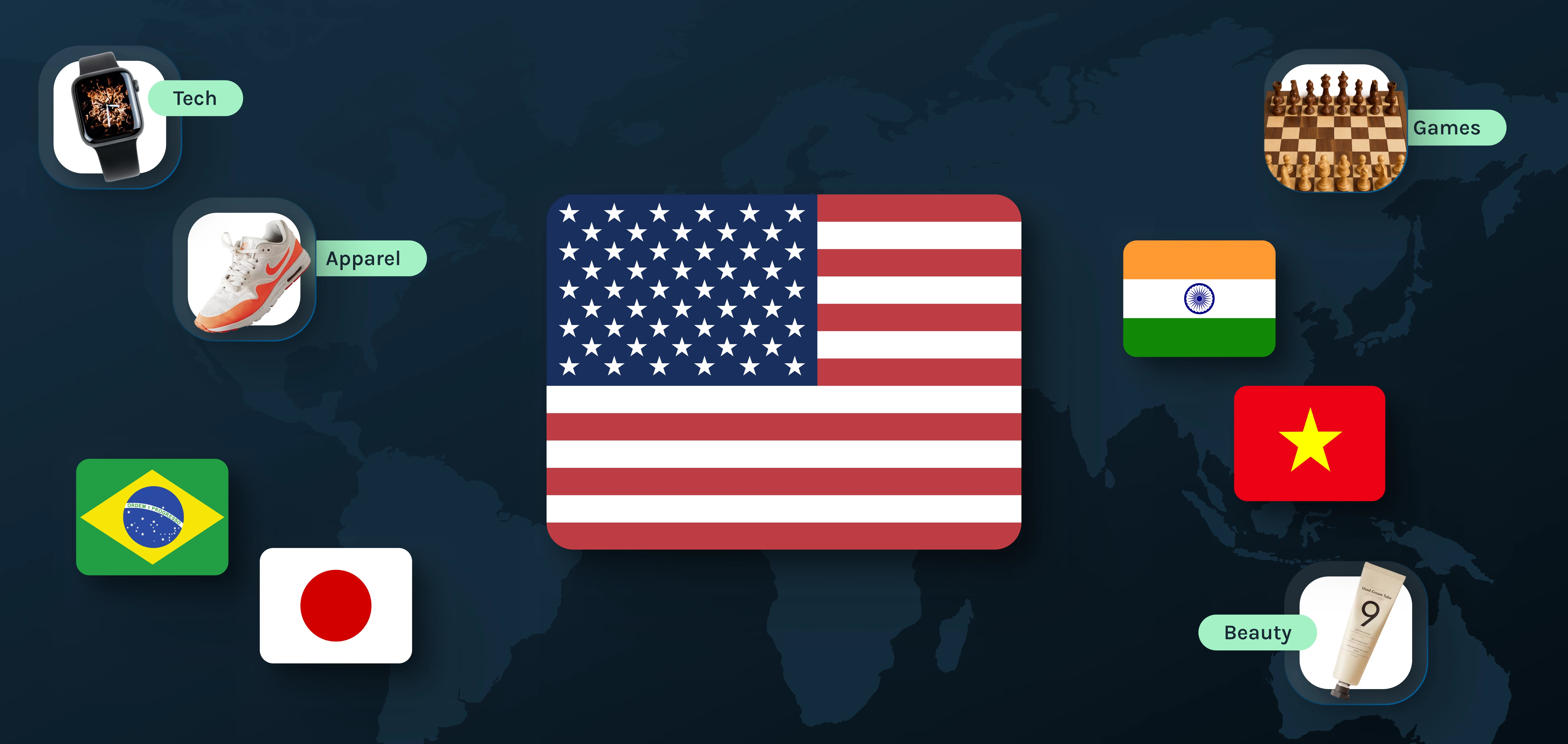
A global tariff policy affects most countries exporting to the United States.
This includes:
- China
- Vietnam
- India
- European Union countries
- Canada and Mexico, depending on trade agreements
If a 10 percent global tariff applies broadly, nearly all imported goods could be impacted.
For sellers sourcing internationally, diversification and cost modeling become critical.
Moving Forward in a Changing Tariff Landscape
Trump tariffs, Supreme Court rulings, and global trade shifts have changed international shipping.
Import costs are higher. Customs rules are stricter. But global selling is still possible. The key is operational control.
If you understand your true landed costs, reduce manual shipping tasks, compare carrier rates, and automate customs documentation, you can protect margins while continuing to grow.
For store owners who want to reduce costs and save time, optimizing shipping operations by signing up with a shipping platform like Easyship is one of the most practical steps you can take in 2026.
Easyship has a range of tools and features to make your international shipping stress-free. Ready to try it out? Sign up for free today!
Frequently Asked Questions
What is IEEPA?
IEEPA is a law that allows the president to take economic action during a national emergency. It was used to justify certain tariffs.
What are IEEPA-based tariffs?
They are tariffs imposed under emergency powers rather than standard trade laws.
Why did the Supreme Court strike down IEEPA-based tariffs?
The Court ruled that IEEPA does not clearly authorize broad global tariffs with major economic impact.
Does this mean tariffs are over?
No. Tariffs can still be imposed under other laws, including Section 122 of the Trade Act of 1974.
What is Section 122?
Section 122 allows temporary tariffs to address trade imbalances, but it has limits on duration and scope.
How much tariff could be implemented?
Current proposals include a 10 percent global tariff and possible increases to 15 percent.
How do tariffs affect eCommerce sellers?
They increase landed cost, reduce margins, and make shipping cost control more important.
What should eCommerce sellers do now?
Review landed costs, compare carriers, automate customs processes, and plan for 10–15 percent tariff scenarios when forecasting inventory costs.
.svg)
.svg)




.svg)




.svg)
.svg)
.svg)

.svg)
.svg)