What is In-House Fulfillment?
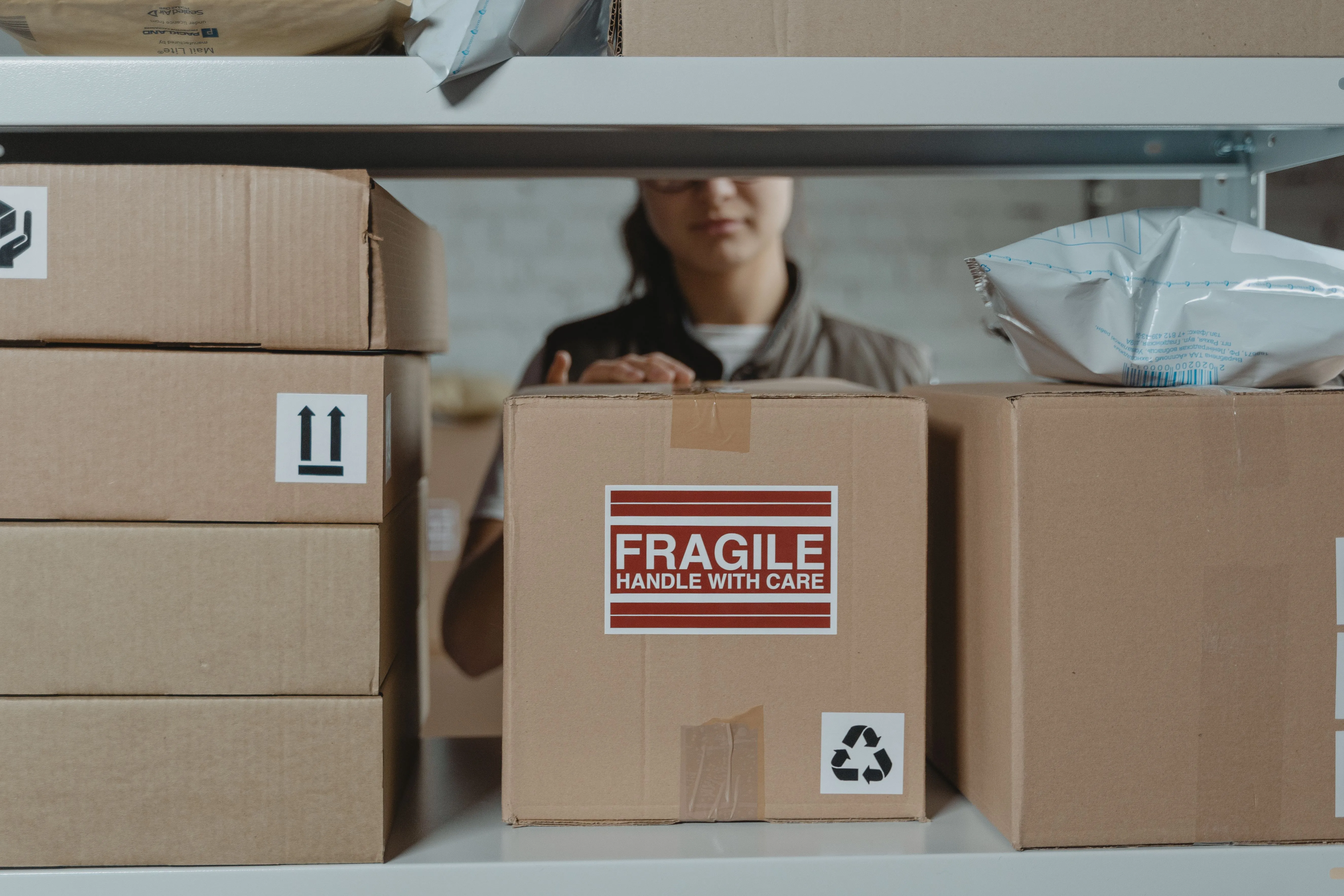
In-house fulfillment is when you handle every step of shipping yourself, in your own space, with your own team, instead of outsourcing it to a warehouse or fulfillment provider.
That means you own or rent the space, hire the people, buy the boxes, and print the labels — nothing in the chain is outsourced. It's the opposite of using a third-party warehouse (3PL), and it's how most eCommerce founders start: if you're shipping out of a garage, a back room, or a small leased warehouse, you're already doing it. The only question is how long it stays the right model as your order volume grows.
When the boxes outgrow your space, that's the cue to look at Amazon Multi-Channel Fulfillment, Easyship Fulfillment, or a 3PL.
How Much Does it Cost to Set Up an In-House Fulfillment Center?
At 100 orders a day, or 3,000 a month, in-house fulfillment runs $840 a day and $25,200 a month. 3PL comes in a bit higher at $920 a day and $27,600 a month. Scale to 1,000 orders a day, 30,000 a month, and in-house reaches $8,400 a day, $252,000 a month, while 3PL hits $9,200 a day, $276,000 a month.
That's before holiday peaks, returns processing, or the first time something gets stolen, damaged, or lost.
Here's a realistic breakdown (estimated) for a small US operation shipping around 1,000 orders per month followed by an estimate how much it would cost for 100, 500 and 1000 orders:
| Shared and Pre-Order Inputs |
Value |
| Order value / AOV ($) |
$100.00 |
| In-house postage per order ($) |
$6.25 |
| 3PL postage per order ($) |
$5.75 |
| Loaded labor rate ($/hr) |
$20.00 |
| Orders packed per labor-hour |
20 |
| Labor overhead multiplier |
1.40 |
| Warehouse rent ($/sq ft/yr) |
$10.00 |
| Packaging per order ($) |
$0.75 |
| 3PL pick & pack per order ($) |
$3.25 |
| 3PL tech / WMS fee per order ($) |
$0.20 |
| 3PL monthly minimum ($) |
$500.00 |
Source: CommercialSearch, ZipRecruiter, Opensend
How Much Would In-House vs 3PL Actually Cost a Store Shipping 100, 500, or 1,000 Orders a Month?
Here's the combined table:
| Shared and Pre-Order Inputs |
Value |
| Order value / AOV ($) |
$100.00 |
| In-house postage per order ($) |
$6.25 |
| 3PL postage per order ($) |
$5.75 |
| Loaded labor rate ($/hr) |
$20.00 |
| Orders packed per labor-hour |
20 |
| Labor overhead multiplier |
1.40 |
| Warehouse rent ($/sq ft/yr) |
$10.00 |
| Packaging per order ($) |
$0.75 |
| 3PL pick & pack per order ($) |
$3.25 |
| 3PL tech / WMS fee per order ($) |
$0.20 |
| 3PL monthly minimum ($) |
$500.00 |
If you're already packing from space and staff you own outright, your real in-house number will look better than this from-scratch model.
Run your own numbers, or chat with Easyship fulfillment experts to see where you land.
How Does In-House Order Fulfillment Work Step by Step?
The process flows through six main stages:
- Receiving. Inventory arrives from your supplier. You count it, check for damage, and put it on shelves.
- Storing. Each SKU gets a fixed location so pickers can find it fast. Most brands use simple shelving plus a spreadsheet or barcode scanner.
- Picking. An order comes in. A team member walks to each shelf and pulls the right items.
- Packing. Items go into a box or mailer, with packing slips, gift notes, or branded inserts as needed.
- Labeling. You print a shipping label using software that compares carrier rates, or just a single carrier account.
- Shipping. The carrier picks up at the door, or you drop off at a depot.
- Tracking and post-purchase. The customer gets a tracking link. Your CS team handles WISMO tickets if delivery slips.
The flow is the same whether you do 20 orders a week or 2,000 a day. The whole loop sounds simple. It is, on a good day. The trouble starts when order volume climbs and one person can't run all 7 steps without breaking the day.
What are the Advantages of In-House Fulfillment?
There are five real advantages, and they all boil down to control:
- Tight control over the unboxing experience. You decide on the box, the tissue, the branded sticker, the handwritten note. A 3PL will do this too, but at a price.
- Lower per-order cost at low volume. Below 500 orders a month, in-house is almost always cheaper than a 3PL on a per-order basis. You only pay for what you actually use.
- Direct quality control. Damaged item? You see it before it ships. SKU mismatch? You catch it. There's no email chain with a warehouse manager.
- Faster reaction to product changes. Launching a new bundle? Adding a free sample? You change it on the floor today. A 3PL needs a change request and lead time.
- Better data for fixing problems. Returns, damages, picking errors, your team sees the patterns first. That feedback loop is harder to replicate when fulfillment is outsourced.
If your AOV is high, your unboxing matters to the brand, and you have someone reliable on the warehouse floor, in-house can be a real moat.
What are the Disadvantages of In-House Fulfillment?
The list of disadvantages is longer, and each one gets heavier as you grow.
- Labor is your biggest cost and your biggest risk. Hiring, training, sick days, holidays, peak-season scaling. A two-person warehouse stops working the day someone calls in sick.
- Real estate is fixed cost. You pay rent every month, whether you ship 200 orders or 2,000.
- Carrier rates are worse without volume. Solo merchants pay close to retail. A 3PL or a multi-carrier platform pools your shipments with thousands of others to negotiate down.
- Shipping mistakes hurt your reputation. A wrong address, a damaged box, a missed cutoff time. With in-house, the buck stops with you.
- No 2-day delivery infrastructure. Buyers expect Amazon-speed delivery. Hard to deliver from one warehouse in Texas to a customer in Maine in 48 hours without paying for expedited delivery.
- Peak season is brutal. Q4 volumes can be 3x to 5x your baseline. You either over-hire or watch orders slip.
- No focus on growth. Every hour you spend taping boxes is an hour you don't spend on product, marketing, or sales.
In-House Fulfillment vs 3PL: Which is Right for Your Business?
Stick with in-house fulfillment while you're under about 500 to 1,000 orders a month, your margins cover rent, labor, and materials, and someone on your team can pack orders without falling behind on marketing, product, or support.
Move to a 3PL once you pass roughly 1,000 to 1,500 orders a month, or once packing and shipping eats 15 to 20 hours a week of someone who should be doing something else. Low AOV pushes the switch earlier too: a $6 pick-and-pack fee eats a much bigger share of a $25 order than a $150 one.
Here's a side-by-side comparison:
| Factor |
In-House Fulfillment |
Third-Party (3PL) |
| Setup cost |
$5,000.00 to $20,000.00 upfront |
$0.00 to $1,000.00 |
| Monthly fixed cost |
$8,000.00 to $25,000.00 |
Pay-per-use |
| Speed to scale |
Slow (hire and train) |
Fast (already staffed) |
| Carrier rates |
Retail or near-retail |
Pre-negotiated discounts |
| 2-day US delivery |
Hard (one location) |
Standard (multi-warehouse 3PL networks) |
| Brand experience control |
Full |
Partial (some 3PLs offer custom packaging) |
| Best fit |
Under 1,000 orders/month, high AOV, regulated products, niche unboxing |
1,500+ orders/month, multi-region, brands prioritizing growth |
Pick in-house if: Your AOV is over $100, you ship under 1,500 orders/month, your unboxing is part of the product, or you sell regulated items most 3PLs won't touch.
Pick a 3PL if: You're growing fast, your team should be working on marketing or product, your customers are spread across the country, or you're hitting peak-season ceilings.
Pick a hybrid if: You're somewhere in the middle. A common setup is in-house for VIP or subscription orders (control), 3PL for bulk DTC (speed and cost).
How Do You Set Up an In-House Fulfillment Center?
If you've decided in-house is the right move, here's a setup playbook that works for SMBs.
Step 1: Forecast your volume for the next 12 months. Don't size your space for today's orders, size for what you expect at peak season. Add buffer.
Step 2: Pick a location with the right tradeoffs. Cheaper rent in a remote area saves money but adds shipping cost (longer zones to your customers). A central US location (Texas, Indiana, Ohio) is the sweet spot for most domestic brands.
Step 3: Lay out the floor. Receiving zone at the door, shelving in the middle, packing tables near the loading area, print station and supplies nearby. Walk the flow, pretend you're an order, see where you'd get stuck.
Step 4: Set up your tech stack. You need three things:
- An inventory management system (IMS) or warehouse management system (WMS) to track stock
- A shipping platform to compare carrier rates and print labels
- An integration that ties your store, IMS, and shipping software together
Step 5: Hire and train slowly. Start with one part-time packer. Document everything (a Google Doc works). Don't promote anyone to "warehouse manager" until you have 3+ staff.
Step 6: Measure four metrics weekly.
- Orders shipped per labor hour
- Pick accuracy (% of orders shipped correctly)
- Cost per order (all-in)
- Damage and return rate
Step 7: Plan your scale-out trigger. Decide ahead of time at what point you'll switch to a 3PL or hybrid. For most SMBs, that's 1,500 orders/month or 4 hours of daily packing time, whichever comes first.
What Software Do You Need for In-House Fulfillment?
Based on your volume and scale, there are three major types of software that you need (either individually or combined). Inventory management software, shipping software to compare courier options as you grow and order management for those with large scale volume to handle order intake. Most large scale shippers go for integrated software that helps do all.
- Inventory management software (IMS). Tracks what you have, where it is, and when to reorder. Examples include Cin7, Zoho Inventory, Sortly, and Brightpearl. Larger brands move to NetSuite or a full WMS.
- Shipping software (multi-carrier). Compares courier services in real time, prints labels in bulk, automates rate-shopping rules. This is where shipping software saves you the most money: pre-negotiated carrier discounts, instant rate comparison, and integrations with 60+ platforms (Shopify, WooCommerce, Squarespace, eBay, TikTok Shop, Amazon). You can start with a Free plan for low-volume merchants later moving to Paid plans starting at $29/month unlock features like rates at checkout, branded tracking, and shipping rules.
- Order management or store integration. Most Shopify and WooCommerce sellers don't need a separate tool here, the eCommerce platform handles order intake. Brands selling on 4+ marketplaces sometimes add a multi-channel listing tool.
For warehouse staff, a $200 barcode scanner and a thermal label printer (Zebra, Brother, Dymo, or Rollo all work with Easyship) are the only physical pieces of tech you really need to start.
When Should You Switch From In-House to Outsourced Fulfillment?
You'll usually feel the switch before the spreadsheet says it. The most common signs:
- Packing eats more than 4 hours of your team's day
- Peak season makes you cry every November
- You're losing customers to 2-day delivery competitors
- You've outgrown your warehouse space and the next lease is a 3-year commitment
- A picking or shipping error reaches a public review
- You can't take a vacation without something going wrong
Once you've run the numbers, Easyship Fulfillment Services is worth a look. It runs on the same platform you already use for shipping, at up to 40% lower cost than typical fulfillment-only providers, with 99.8% pick and pack accuracy across receiving, packing, and labeling.
You keep your shipping software, your store integrations, your branded tracking, and your discounts. You hand off the boxes, the rent, and the picking shifts.
What about International Orders if I Fulfill them In-House?
International is where in-house gets the hardest. You're suddenly responsible for HS codes, customs declarations, taxes and duties, and a much wider mix of carriers.
A few practical tips:
Show real rates and duties at checkout. Cart abandonment for international shoppers spikes when costs are unclear. Easyship's tax and duty at checkout covers 200+ destinations with DDP or DDU options, so the customer sees the full landed cost before paying.
Pick the right courier per lane. USPS, UPS, FedEx, DHL, and regional posts each have different sweet spots. Multi-carrier platforms compare them automatically.
Track everything. Branded tracking pages reduce WISMO inquiries by up to 63%, which matters when international transit times are 10 to 20 days.
If your international volume grows past 500 orders/month, that's another scale-out trigger. Cross-border 3PL gets complicated quickly, and an integrated platform that handles both shipping and fulfillment is almost always cheaper than juggling separate vendors.
If you're keeping fulfillment in-house, start a free Easyship account to get up to 91% off retail shipping, real-time rate comparison across 550+ couriers, and one dashboard for every label.
If you're ready to outsource, book a free Easyship Fulfillment quote and we'll run the numbers against your current setup.
Sign Up for Free Today!
Frequently asked questions
What is the difference between in-house fulfillment and 3PL?
In-house fulfillment means you store, pick, pack, and ship orders yourself. A third-party logistics provider (3PL) is a company that does it for you. In-house gives you full control and can be cheaper at low volume. A 3PL gives you scale, multi-warehouse coverage, and pre-negotiated carrier rates, but adds a service fee per order.
At what order volume should I move from in-house to a 3PL?
For most SMB sellers, the crossover point is between 1,500 and 3,000 orders per month. Above 1,500, the per-order cost of in-house starts to lose to a 3PL once you factor in rent, labor, and carrier rates. Above 3,000, in-house is almost always more expensive unless you sell regulated products or have a brand-critical unboxing experience.
Can I run in-house fulfillment from my home or garage?
Yes, up to a point. Many brands start in a garage or spare room and ship 50 to 300 orders a month from there. Watch for two things: insurance (homeowner policies don't always cover commercial inventory) and zoning (some residential areas restrict commercial pickups). Once you hit 500 orders/month, a leased commercial space is usually safer and more efficient.
What software do I actually need to do in-house fulfillment?
The minimum stack is three tools: an inventory tracker (Sortly, Zoho Inventory, or Cin7), a multi-carrier shipping platform (Easyship for label discounts and automation), and your eCommerce platform's order management (Shopify or WooCommerce both handle this natively). A barcode scanner and a thermal label printer are the only hardware most small brands need.
How do I cut shipping costs while keeping fulfillment in-house?
Three levers: compare carriers on every order instead of using one default, batch your label printing to save time, and use shipping insurance instead of self-insuring lost packages. Easyship covers all three: 550+ courier services compared in real time, bulk label printing, and up to $10,000 USD shipment coverage included on every shipment.
Can I use in-house fulfillment alongside a 3PL?
Absolutely. Hybrid setups are common. A typical pattern: in-house for subscription boxes, VIP customers, or custom kitting (where the unboxing matters most), and a 3PL for bulk DTC orders that just need to ship fast. The same shipping software can manage labels for both.
What's the biggest mistake people make with in-house fulfillment?
Underpricing their own time. Founders often calculate cost per order using only labor and materials, forgetting their own hours. If you're spending 15 hours a week on fulfillment that you should be spending on marketing or product, the real cost of in-house is much higher than the spreadsheet shows.
.svg)
.svg)




.svg)





.svg)
.svg)
.svg)

.svg)
.svg)