Singapore Tariffs – Navigating Trump’s 2025 Trade Policy and Business Impacts

Trump’s 2025 reciprocal tariffs could reshape Singapore trade; discover how to stay profitable and avoid costly delays.
Singapore Tariffs – Navigating Trump’s 2025 Trade Policy and Business Impacts
3 Min Read
August 21, 2025
Augustin
3 min read
Aug 21, 2025

Key Points:

  • Singapore’s current 10% baseline tariff could rise to 25% under Trump’s reciprocal tariff policy in 2025.
  • If goods from Singapore are found to have been transshipped to evade these tariffs, they could face a much higher penalty rate of 40%.
  • New US tariffs target Asian nations, with penalties for transshipment and removal of de minimis exemptions for imports.
  • High-value sectors like semiconductors, chips, and pharmaceuticals face elevated risk from sudden tariff hikes.
  • Businesses are mitigating tariff impact through supply chain diversification, frontloading exports, and active policy monitoring.
  • Easyship’s automation tools enable real-time cost calculation, optimal routing, and instant compliance documentation for exporters.

Global trade in 2025 is anything but predictable, and Singapore tariffs are now a part of the center of that uncertainty. With US President Donald Trump doubling down on reciprocal tariffs—matching or exceeding the duties other countries place on American goods—Singapore exporters are watching closely.

While the 10 baseline rate for Singapore remains in place for now, the administration has already announced new tariffs on other Asian nations, including Vietnam, Malaysia, and India, sending a clear signal: no country’s rate is guaranteed.

Against this backdrop, companies are working to adapt faster than policies change. The good news is that with the right strategy—and the right tools—you can stay ahead.

In this guide, we’ll break down where Singapore stands today, what these tariffs mean for your business, and how automation platforms like Easyship help you navigate shifting international trade rules with confidence.

What are the Latest Trump Tariffs on Singapore?

Singapore tariffs are taxes on goods that move from Singapore into other countries, including the United States. For eCommerce businesses, these tariffs can affect prices, delivery speed, and competitiveness.

In 2025, US President Donald Trump reintroduced aggressive reciprocal tariffs under his “America First” trade policy. This means the tariff rate applied to imports from a country often matches or exceeds the rate that country charges on US goods.

For Singapore exporters, the stakes are high. The US is a key market for electronics, apparel, and semiconductors. While Singapore’s 10 baseline tariff rate remains lower than some Asian peers, the administration has announced possible increases to 25%.

Overview of Trump’s 2025 Tariff Landscape

In March and April 2025, the US began imposing new tariffs on dozens of countries. US President Donald Trump said the aim was to protect the economy and secure better trade deals.

Key details:

  • Baseline reciprocal tariff: 10% for most trading partners.
  • High rates: Up to 40% for certain products, including steel, chips, and finished goods from China, Vietnam, and Indonesia.
  • Transshipment penalties: Additional charges when goods are routed through tariff-hit nations.
  • De minimis removal: Even low-value shipments are subject to full duties and taxes.
Tariff Type Rate Countries / Products Affected
Baseline Reciprocal Tariff 10% Most countries, including Singapore (for now)
High Reciprocal Tariff 25% – 40% Targeted Asian nations; some steel and electronics
Transshipment Penalty + Additional Routes through Vietnam, Malaysia, Thailand
De Minimis Removal Full duties All goods above $0 except postal exemptions

Singapore’s Current Tariff Status

As of August 2025, Singapore is still on the baseline 10% list. However, there is a threat of a 25% tariff if the government is linked to restricted imports like Venezuelan oil.

Compared to Philippines, Malaysia, and Thailand, Singapore remains better positioned due to:

  • Lower reliance on Chinese content in exports
  • A US free trade surplus
  • Strong negotiations toward a preferential agreement

Still, foreign policy shifts can happen quickly. If the states decide to impose higher rates, businesses must act fast.

Business Challenges and Risks for Singapore Exporters

The framework for reciprocal tariffs creates uncertainty for exporters.

Main challenges:

  1. Unpredictable changes: Tariff cycles shift from May to August with little warning. Earlier in the year, Trump announced new rates on India and Mexico, affecting supply chains worldwide.
  2. Sector targeting: Semiconductors, chips, and pharmaceuticals are high-value exports subject to possible tariff hikes.
  3. Regional supply chain impact: Many Singapore products use components from China, Vietnam, and Malaysia, which could trigger additional duties if classified as transshipments.
Risk Factor Impact on Companies
Sudden rate hikes Price increases and reduced competitiveness
Targeted sectors Loss of US market share for key categories
Transshipment rules Higher costs for goods routed through Asian hubs

How will Business Shipping and Logistics be Affected?

Higher tariff rates don’t just raise prices—they affect the international shipping process.

Implications:

  • Higher landed costs: Taxes and duties make it harder to offer competitive prices.
  • Complex customs rules: HS codes, origin declarations, and detailed product content are required.
  • Routing flexibility: Businesses may need to bypass Korea, Taiwan, or other countries with higher rates.

How Businesses Are Responding to Tariff Volatility

With there being so much confusion around the current state of affairs, businesses need to incorporate different strategies into their supply chain process to reduce losses. Here are some of the changes businesses can implement to stay efficient:

  1. Frontloading exports before new rates take effect.
  2. Using an automatic tax and duties calculator or a shipping software to automate customs paperwork.
  3. Diversifying suppliers to reduce exposure to China, Malaysia, and Vietnam.
  4. Government support, including tariff advisory programs and free trade agreement updates.
  5. Switching to US-based fulfillment services to offset the tariff rates.

How Easyship can Help

Easyship provides tools that help companies adapt when tariff rates change.
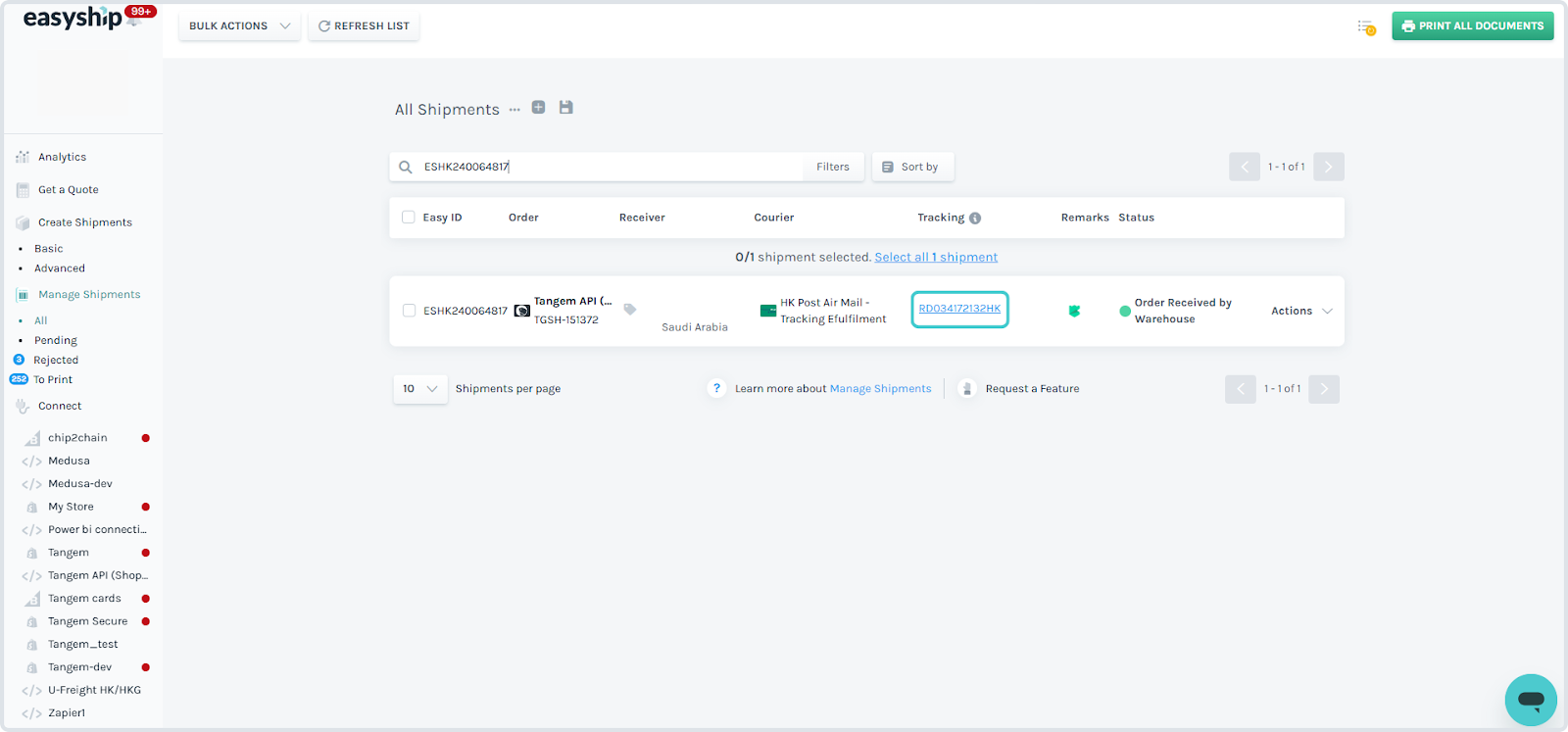
  • Real-time calculations: Exact costs for every destination.
  • Dynamic routing: Avoid countries with higher rates or penalties.
  • Automated documentation: Customs forms generated instantly.
  • At-checkout transparency: Customers see total costs, including taxes and duties.

Case Study – A Singapore Exporter Adapting to Tariffs with Easyship

Delugs, a premium watch accessories brand based in Singapore, ships 40% of its orders to the US and was struggling with manual fulfillment, rising costs, and slow delivery times. Orders were processed by hand, routed through local postal systems, and took up to 7–10 business days to reach key markets like Hong Kong. 

By integrating Easyship with their Shopify store, Delugs automated fulfillment, label generation, and tracking, while using a multi-courier network—including DHL, FedEx, and QXpress—to cut costs and speed up delivery. 

As a result, Hong Kong shipments now arrive in just 1–2 days, operational efficiency has improved, and customers enjoy real-time tracking updates, prompting Operations Manager Sammi Chin to say, “With Easyship, we no longer worry about reaching our customers, no matter where they are in the world.”

Staying Competitive Amid Singapore Tariffs in 2025

Singapore tariffs remain manageable now but could increase. Sellers should:

  • Track announced policy shifts from US President Donald Trump
  • Plan for additional costs in shipping and international compliance

Start your free Easyship trial and navigate the 2025 tariff changes with confidence.

Ready to simplify and save on shipping?
Easyship is here to help.

Easyship helps eCommerce sellers stay profitable in a changing trade environment. With reciprocal tariffs, customs duties, and new rules for cross-border orders, our free shipping tools and smart dashboard are built to help you ship smarter and sell globally—without the stress.

FAQ – Singapore Tariffs and eCommerce Shipping in 2025

What is the current tariff rate for Singapore exports to the US?

As of August 2025, Singapore faces a 10% baseline reciprocal tariff. However, there is a potential threat of this increasing to 25% if certain trade conditions change.

How do reciprocal tariffs work?

Reciprocal tariffs match or exceed the rates other countries place on US goods. If a country increases tariffs on US products, the US may impose similar or higher rates in return.

Which sectors in Singapore are most at risk from new US tariffs?

High-value exports such as semiconductors, chips, and pharmaceuticals are most vulnerable due to their strategic and economic importance.

How can Singapore exporters reduce tariff-related costs?

Strategies include diversifying suppliers, frontloading shipments before rate changes, and using shipping platforms like Easyship for cost calculation and compliance automation.

What role does Easyship play in managing tariff challenges?

Easyship offers real-time duty and tax calculations, optimal courier routing, automated compliance documentation, and at-checkout transparency to help exporters minimize costs and delays. Companies can also use Easyship for their US-based 3PL needs.

TABLE OF CONTENTS

Key Points:

  • Singapore’s current 10% baseline tariff could rise to 25% under Trump’s reciprocal tariff policy in 2025.
  • If goods from Singapore are found to have been transshipped to evade these tariffs, they could face a much higher penalty rate of 40%.
  • New US tariffs target Asian nations, with penalties for transshipment and removal of de minimis exemptions for imports.
  • High-value sectors like semiconductors, chips, and pharmaceuticals face elevated risk from sudden tariff hikes.
  • Businesses are mitigating tariff impact through supply chain diversification, frontloading exports, and active policy monitoring.
  • Easyship’s automation tools enable real-time cost calculation, optimal routing, and instant compliance documentation for exporters.
Get Your Ship Together.

By submitting the form, you agree to receive marketing emails from Easyship.

Save up to 91% on Shipping. Try for free.

Effortlessly compare 550+ courier services with one global account. Instant discounts. Start in minutes.

No items found.
No items found.
Share on: