An EORI number (Economic Operators' Registration and Identification number) is a unique ID that customs authorities use to identify your business on shipments into the EU. It has been a prerequisite for customs clearance in the EU since Regulation (EC) No 312/2009 came into force on 1 July 2009.
If you're a US-based seller (or outside EU), shipping to Germany, you need one before your shipment can clear German customs, it's separate from a VAT number, though both may show up on your paperwork. You apply free of charge, and there's no need to pay a third-party provider to get one.
Once your EORI number is sorted, the rest of the paperwork gets easier. Easyship pulls your EORI and VAT details straight into the commercial invoice for every shipment. This is valid across 550+ courier services at the same time, so you're not solving customs compliance and shipping costs as two separate problems.
What Is an EORI Number?
An EORI number is a unique identifier that customs authorities assign to businesses and individuals who import or export goods. In the EU, it replaced the old national customs number and is valid for customs clearance across all member states
For a shipment going from the US or non -EU to Germany, this number has to be quoted on the commercial invoice and customs declaration before German customs will release the goods.
When Is an EORI Number Used While Shipping to Germany?
Customs authorities use the EORI number to identify the operator behind a shipment. For a US seller shipping to Germany, it's required for:
- Lodging a customs declaration when your goods arrive in Germany
- Entry summary declarations, if you're the one filing them
- Acting as the declarant or carrier for the shipment
- Applying for any customs decision related to your goods
If none of those apply to you directly, for example, your freight forwarder or courier handles the declaration on your behalf using their own EORI number, you may not need one yourself. See Easyship's guide on the main shipping documents every international order needs for how the EORI field fits into your commercial invoice.
Do US Sellers Need an EORI Number to Ship to Germany?
Not automatically. There's no blanket requirement for businesses based outside the EU to hold an EORI number. You need one specifically if you lodge a customs declaration yourself, act as a carrier, or otherwise appear as the declarant on shipments into Germany (Source: Zoll (German Customs), 2026).
In practice, most US sellers shipping regularly to Germany end up needing one, because the commercial invoice and customs paperwork require it once you're listed as an exporter of record.
Where Do You Get an EORI Number for Shipping to Germany?
You register in the EU country where you'll first lodge a customs declaration. For a US seller shipping specifically to Germany, that means applying through German customs.
The EORI number is issued free of charge by the General Directorate of Customs' Master Data Management office in Dresden (Generalzolldirektion, GZD – DO Dresden). You can apply through Germany's Customs Portal, or, during a transitional period until 30 September 2026, using Form 0870a. From 1 October 2026, the Customs Portal becomes mandatory for new applications.
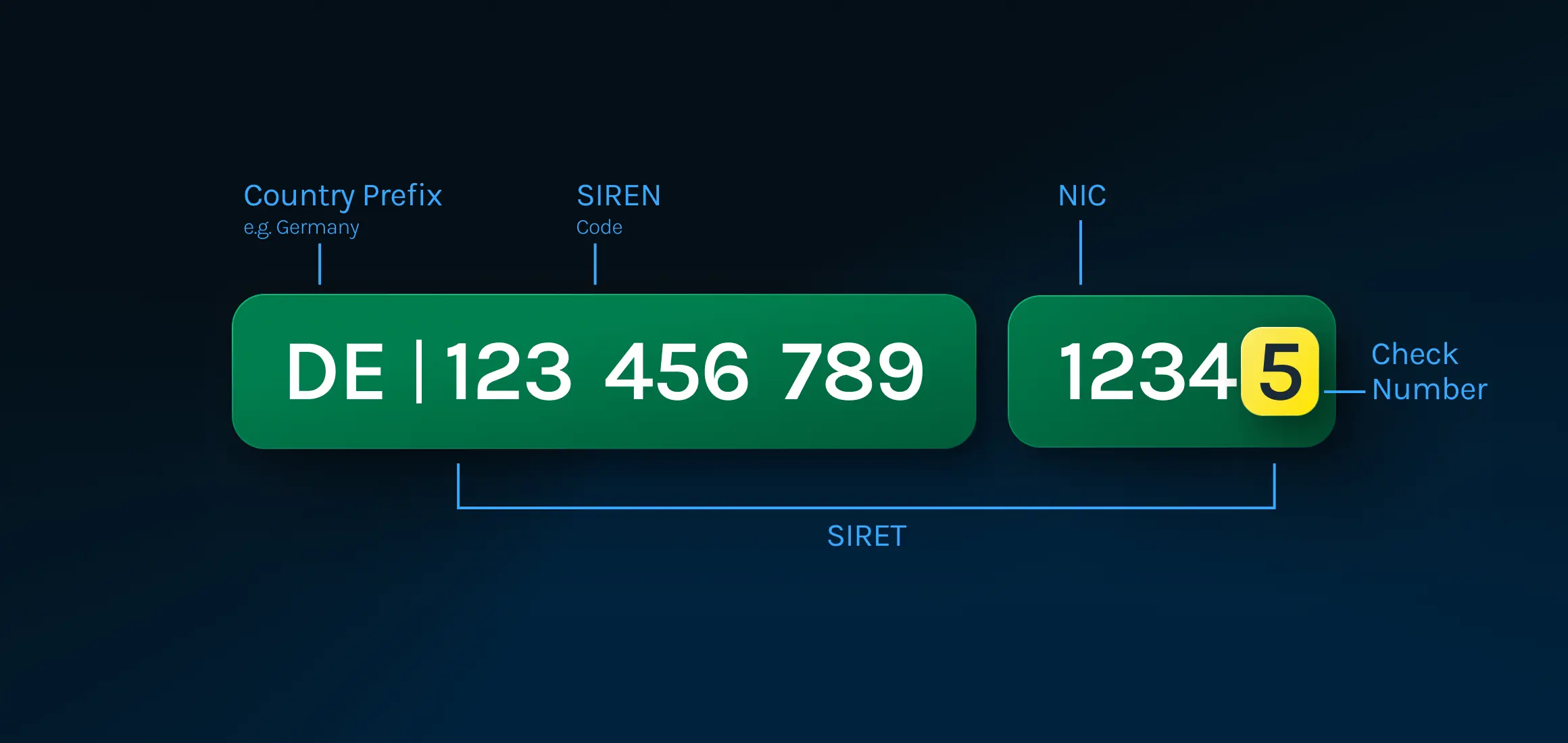
Here's what one looks like in practice: DE123456789012345.
"DE" is the country code. The 15 digits after it are unique to the business, assigned when German customs approves the registration.
However, before you rely on an EORI number, yours or one a partner gave you, you can confirm it's active. The European Commission runs a free validation tool. All you have to do is enter the number, and it tells you whether it's registered and to whom.
It takes a few seconds and catches the two most common problems: a typo in the number, or a number that was never actually issued. Some sellers assume a VAT number covers this too, and only find out it doesn't when a shipment gets held.
If you're a non-EU business applying, you'll need to include a short written explanation of why you need the number and confirm Germany is the right country for your registration, since EU rules only require registration in one member state.
If you already ship through Easyship, you can store your EORI and VAT numbers directly in your account and apply them automatically to every commercial invoice, rather than re-entering them shipment by shipment.
What Does a German EORI Number Look Like?
An EORI number consists of the 2-letter country code of the issuing country, followed by up to 15 alphanumeric characters unique to that business. A German-issued EORI number starts with "DE."
It does not have an expiration date. It can only be invalidated on request, or if your business stops operating, and the underlying data is kept on file for 10 years (Source: European Commission, Taxation and Customs Union, 2026).
Is an EORI Number the Same as a German VAT Number?
No, and it's easy to mix the two up. Germany's VAT identification number (Umsatzsteuer-Identifikationsnummer) follows the format DE plus 9 digits, and is assigned separately by Germany's central tax office, the Bundeszentralamt für Steuern.
Your EORI number isn't derived from your German VAT number, and the two are issued by different bodies for different purposes: the VAT ID is for tax reporting, the EORI number is for customs clearance. If you're also getting set up for German VAT, Easyship's guide to EU VAT, IOSS, OSS, and EORI for sellers walks through how the two requirements connect.
Does the EORI Number Apply to Shipments Within the EU?
No, not once your goods have cleared German customs and entered free circulation. The EU operates as a single market, and goods generally move freely between member states without further customs declarations.
This matters if you use Germany as your entry point into the EU, for example, storing inventory in a German fulfillment center and shipping onward to customers in France, Italy, or elsewhere in the bloc. Your EORI number and German import declaration cover the shipment crossing from the US into the EU. The onward, intra-EU leg to another member state doesn't need a separate EORI number or customs declaration.
One exception: certain excise goods, like alcoholic beverages, tobacco, and energy products, follow separate registration and movement procedures within the EU even though standard customs clearance doesn't apply. For ordinary ecommerce goods outside that category, intra-EU movement doesn't involve EORI-related paperwork at all.
What Happens If You Ship to Germany Without an EORI Number?
Your shipment doesn't clear customs smoothly. Without a valid EORI number on the paperwork where one is required, German customs cannot process the declaration, and the shipment is held until the paperwork is corrected.
That holding period isn't free. Expect:
- Storage fees for every extra day your shipment sits in customs
- Delayed delivery, which hits customer trust and can trigger refund requests
- Extra admin time spent applying for an EORI number under time pressure, instead of before you ship
Duties and VAT are separate charges that apply on top of this, so it's worth reading up on how duties and taxes work for cross-border ecommerce orders before your first shipment to Germany.
This is exactly where having the right shipping setup pays off. Easyship generates the commercial invoice, applies your EORI and VAT numbers automatically, and flags missing customs details before a label prints, so a shipment doesn't leave your warehouse only to stall at German customs.
Getting your EORI number sorted is a one-time task. Getting the rest of your German shipments right, including commercial invoices, duties, and the cheapest courier for each order, is the part that repeats every day.
Compare rates across 550+ couriers and generate compliant customs paperwork automatically with Easyship.
Sign Up for Free Today!
FAQs
What is the EORI number for shipping to Germany?
It's the unique ID German customs use to identify your business on the commercial invoice and customs declaration for shipments arriving from outside the EU. Without it where required, customs can't clear your goods.
Who is required to have an EORI number for shipments to Germany?
US sellers who lodge a customs declaration, act as declarant, or act as carrier for shipments into Germany need one. If a courier or forwarder handles the declaration under their own EORI number, you may not need your own.
How do I find my EORI number from my VAT number?
You can't derive one from the other in Germany. Your EORI number is issued by German customs (Generalzolldirektion), while your German VAT ID is issued separately by the Bundeszentralamt für Steuern. Check your original registration confirmation from German customs if you can't locate yours.
What is an EORI number for airlines?
Airlines and air cargo carriers that move freight across EU borders need an EORI number just like any other importer, exporter, or carrier, it's tied to the movement of goods, not the mode of transport.
Is an EORI number the same as a VAT number?
No. A VAT number is a tax ID used to collect and report VAT. An EORI number is a customs ID used to clear shipments. In Germany, the two are issued by different authorities and serve different purposes.
How long does it take to get a German EORI number?
Applications go through the Generalzolldirektion's Dresden office via the Customs Portal or transitional Form 0870. Processing time depends on document completeness and applying with all required details on hand keeps things moving.
Does an EORI number expire?
No. An EORI number does not have an expiration date. It can only be invalidated on request or if your business stops operating, and the data is kept on file for 10 years.
.svg)
.svg)




.svg)




.svg)
.svg)
.svg)

.svg)
.svg)