Shopify Shipping AppG2 Best Shipping SoftwareCapterra Best Shipping Software
Rated Excellent 4.2 with 1200+ 5-Star Reviews
Trusted By 100,000+ Businesses Worldwide

Shipping Automation Rules API For Carrier Rate Shopping & Intelligent Fulfillment

Rule-based shipping workflows across carriers, regions and SKUs

Easyship's Automation Rules API turns repeatable shipping decisions like carrier comparison, box selection, insurance and tax and duty treatment into conditional actions that execute automatically on every order.

  • Save up to 91% on rates
  • Access 550+ courier services
  • Ship to 200+ destinations
  • 24/7 global support

How To Automate Shipping with Easyship's Rules API

The shipping rules brands follow sit in spreadsheets, warehouse SOPs, custom code or someone's head. The same decisions reoccur across every order: which carrier for Canada, which box for that SKU, when to prepay duties, when insurance is important. This API endpoint is the programmatic interface to Shipping Rules, Easyship's automation engine.

Programmable Rules

Build rules from the criteria that matter: destinations, SKUs, order values, weights, stores and tags.

"If This, Then That"

When conditions match, the carrier, service, package, insurance or duty action applies with no review step.

Carrier Service Control

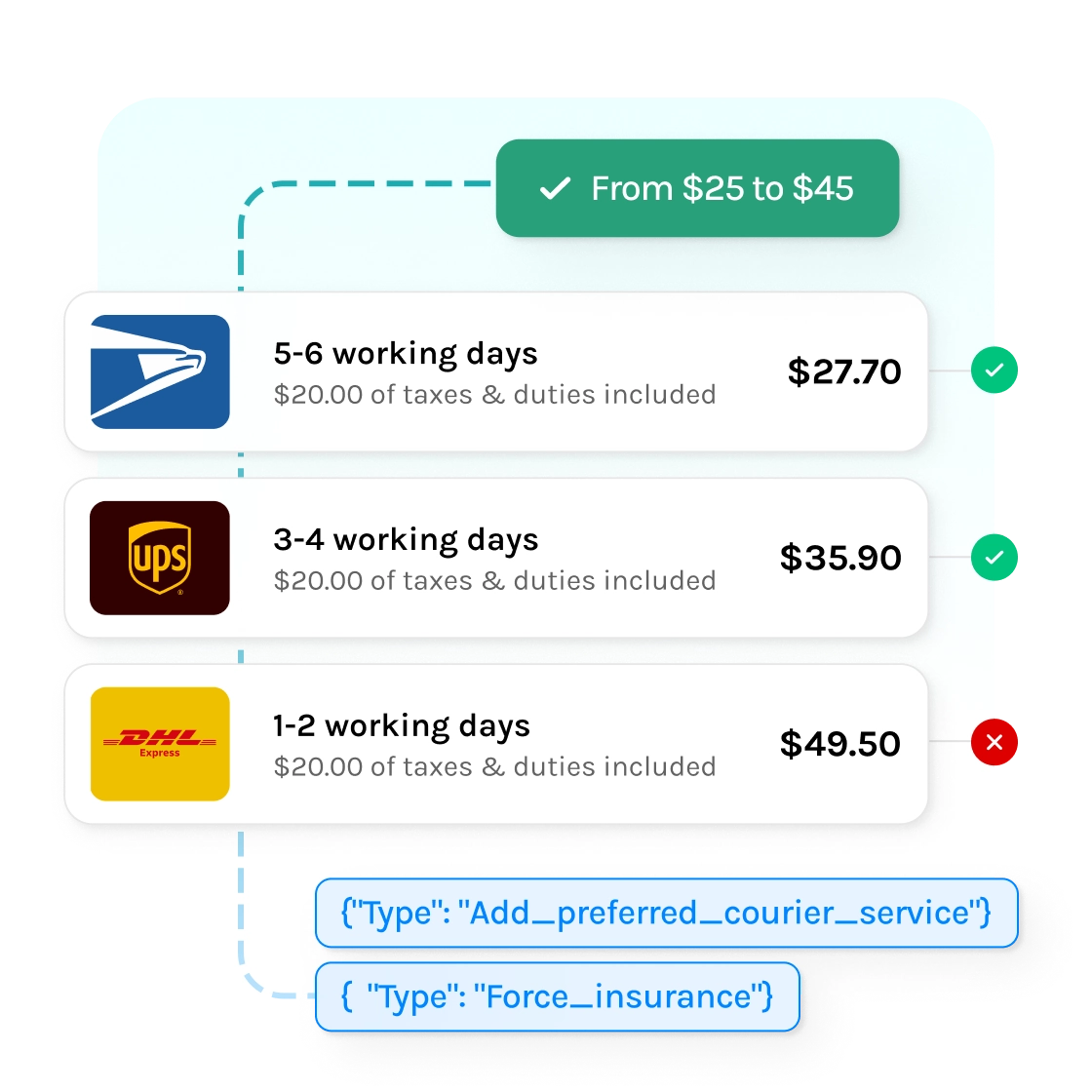
Prefer specific carrier services, exclude services that miss your requirements, or control how options sort.

Balance Speed & Cost

Prioritize economical options and filter services by delivery time. Services you never use stay out entirely.

Duty & Package Rules

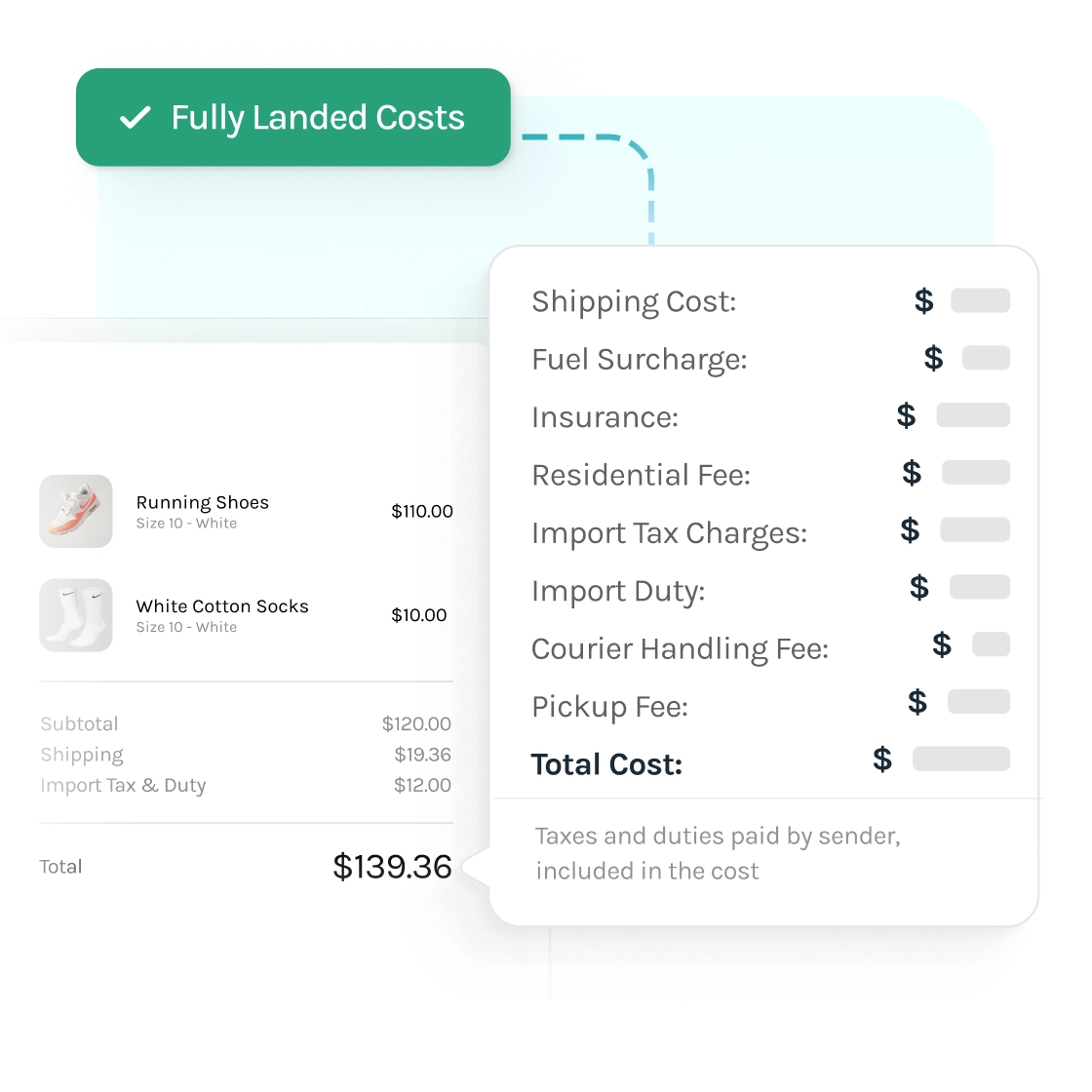
Automate duty treatment, insurance, packaging and ship-from location for every qualifying shipment.

Volume Automation

Rules apply at any order volume, on infrastructure running 99.9% API uptime and SOC 2 compliance.

How does the Shipping Automation Rules API work?

A shipping rule pairs set conditions with defined actions: conditions decide when it runs, actions decide what Easyship does next. When several rules match one order, the highest-priority rule applies and lower-priority conflicting rules are skipped to avoid errors, creating a clean workflow.

  • Generate your API key and connect your fulfillment workflow
  • Create rules with a name, conditions, actions and priority
  • Pass order and shipment details through your normal flow
  • Easyship checks the rules that match (in priority order)
  • The highest-priority match applies removing contradictions

What you can automate in your shipping workflow

The API supports twelve condition types and twelve action types, so most lines in a shipping SOP map directly to a rule. Any order matching your conditions qualifies: an Amazon order over $200, a Shopify order with a fragile SKU, a Canada shipment above a set weight. Analyze your data with combined analytics and find ways to optimize your shipping cost over time.

How automation rules and shipping analytics work together

A rule is a versioned piece of operational policy: create it, reprioritize it, retire it, all without a deploy. When the Analytics API shows a carrier slipping on a lane, the correction ships as a rule edit and applies from the next matching order. Fast iteration to optimize your fulfillment.

Keep rules separate from the integration that ships orders

Your application keeps quoting options via the Shipping Rates API and generating documents via the Shipping Label API, while rules decide how qualifying orders behave with scalable logic. A carrier slips in one market, a price change shifts service preference, or a SKU needs a different size box: you update the rule and automate forever.

What is a Shipping Automation Rules API?

Easyship's Shipping Automation Rules API applies condition-based fulfillment logic automatically, turning repeatable shipping decisions into "if this, then that" instructions that run across orders, carriers and countries. Route UK orders to Royal Mail, restrict postal services above a set value, or require insurance on high-value shipments. Automation rules put you in complete control of your fulfillment operations.

IMPLEMENTATION SUPPORT

Get Expert API Guidance & Implementation Support

Not sure how to get started? Generate your free API Key by clicking "Start Free" or complete this form to speak directly with an implementation expert. What once took months to build can now be achieved in days.

  • Risk-Free: Start with our free plan—no credit card required
  • Global Network: One API endpoint for 550+ global carrier services
  • Quick Setup: Generate your API Key and start building in minutes

Have Questions? We Have Answers

Built For Developers & Enterprise Brands

Whether you’re running operations, coding checkout logic, or managing a global platform, Easyship's Shipping Rates API simplifies shipping with one reliable, scalable API integration.

eCommerce Brands

Instantly save on shipping and fulfillment costs with one unified shipping solution for every sales channel worldwide.

Arrow Right
Global Marketplaces

Offer a completely integrated global shipping experience for buyers and sellers with transparent rates, duties, insurance and discounts.

Arrow Right
Technology Platforms

Connect and embed global shipping services directly into your application for seamless shipping, returns and payment flows.

Arrow Right
Fulfillment & Warehousing

Automate shipping workflows, rate shopping, manifests, pickup scheduling, and analytics while reducing complexity and overheads.

Arrow Right

Shipping Automation Rules API FAQs

What are automation rules in shipping?

Automation rules are pre-defined instructions that tell your shipping system what to do when specific order or shipment criteria are met. A policy such as prepaying duties on EU orders becomes a condition and an action, and it applies to every matching order automatically. This could apply to carrier selection, rate shopping, country preferences, sales channel, checkout settings, SKU specific rules, and many more operational decisions that help you accelerate your fulfillment workflows, minimize human errors, and automate decisons to save hours daily. Saving you both time and money on shipping and fulfillment.

How does the shipping automation rule logic work?

Conditions determine whether a rule applies: destination country, state or zipcode, SKU, product category, store, platform, selling price, items count, shipment weight, order tags, or the carrier the buyer picked at checkout. Actions determine what follows: prefer or exclude carrier services, control sorting, force duty treatment, select or reject packaging, require insurance or tracking levels, and set ship-from location or delivery time. There are a multitude of possibilities based on your exact shipping use case.

What are the components of an automation rule for fulfillment?

A rule contains a name, a description, at least one condition, at least one action, and a priority for when multiple rules interact. The "Canada DDP" example above uses a `match_country` condition for Canada and a `force_incoterms` action for delivered duty paid. Update the rule as requirements change and layer on multiple rules to find the perfect outcome for your specific fulfillment requirements.

What are some examples of rule-based shipping automation?

Common use cases for shipping automation rules include: preferring a carrier for selected destinations, excluding a service for heavy parcels, selecting packaging by SKU, applying duty preferences for certain cross-border lanes, and enforcing tracking or insurance levels depending on the item value. The best candidates for a new automation rule are the decisions your team already repeats daily.

How do I integrate shipping rules into my eCommerce store or marketplace?

Connect Shopify, Amazon, eBay, WooCommerce or your OMS, WMS or NetSuite backend to Easyship and pass order data through your fulfillment workflow. `POST /2024-09/shipping_rules` creates a rule and `GET /2024-09/shipping_rules` lists them, under the `public.shipping_rule:write` and `public.shipping_rule:read` scopes. Rules evaluate the criteria and apply the actions, then your flow continues with rate selection, carrier comparison, label generation and tracking updates.

Why not build shipping rules logic in-house?

A rules engine looks like simple "if this, then that" statements until it ships. Built in-house, every policy change becomes a code deploy and an engineering ticket. And backlogs can grow quick. Easyship maintains the data behind 550+ carrier services in one integration and absorbs carrier API changes and churn, so entering a new market or offering alternative shipping services takes one new rule—not a whole new integration.

How are conflicts between shipping rules resolved?

Your shipping rules are only as powerful as they are accurate. This is where you need a simple way to resolve automation contradictions when conflicts occur. For Easyship, the priority decides the rule. Lower values near the top rank first, so when two rules match the same shipment order, the higher-priority rule applies and the conflicting lower-priority rule is skipped. This gives rules that can match one order distinct priorities. When you create or update a rule, set `recalculate_shipments` to re-apply the logic to affected shipments. Keeping your order flow moving.

Why not build shipping rules logic in-house?

A rules engine looks like simple "if this, then that" statements until it ships. Built in-house, every policy change becomes a code deploy and an engineering ticket. And backlogs can grow quick. Easyship maintains the data behind 550+ carrier services in one integration and absorbs carrier API changes and churn, so entering a new market or offering alternative shipping services takes one new rule—not a whole new integration.

Try the composable shipping API for global eCommerce

Every Easyship API is modular. Allowing you to connect only what you need from rates to returns. Start with live pricing, then layer in label generation, tracking, duties and address validation as you grow.

More Shipping API Resources

Shopify Australia
Technology

Shopify Australia

Easyship helped Shopify Australia enable it's merchants with access a diverse courier network, discounted rates and an integrated logistics solution leading to 4.5x growth in orders.

eBay
Technology

eBay

Find out how eBay leveraged Easyship to improve shipping efficiency, cut costs, and boost global sales, driving $3.68 billion in GMV across 200+ countries

Ostrichpillow
Industry

Ostrichpillow

We helped this famous pillow improve their delivery service by expanding their distribution worldwide and reduce shipping costs by 62%.